
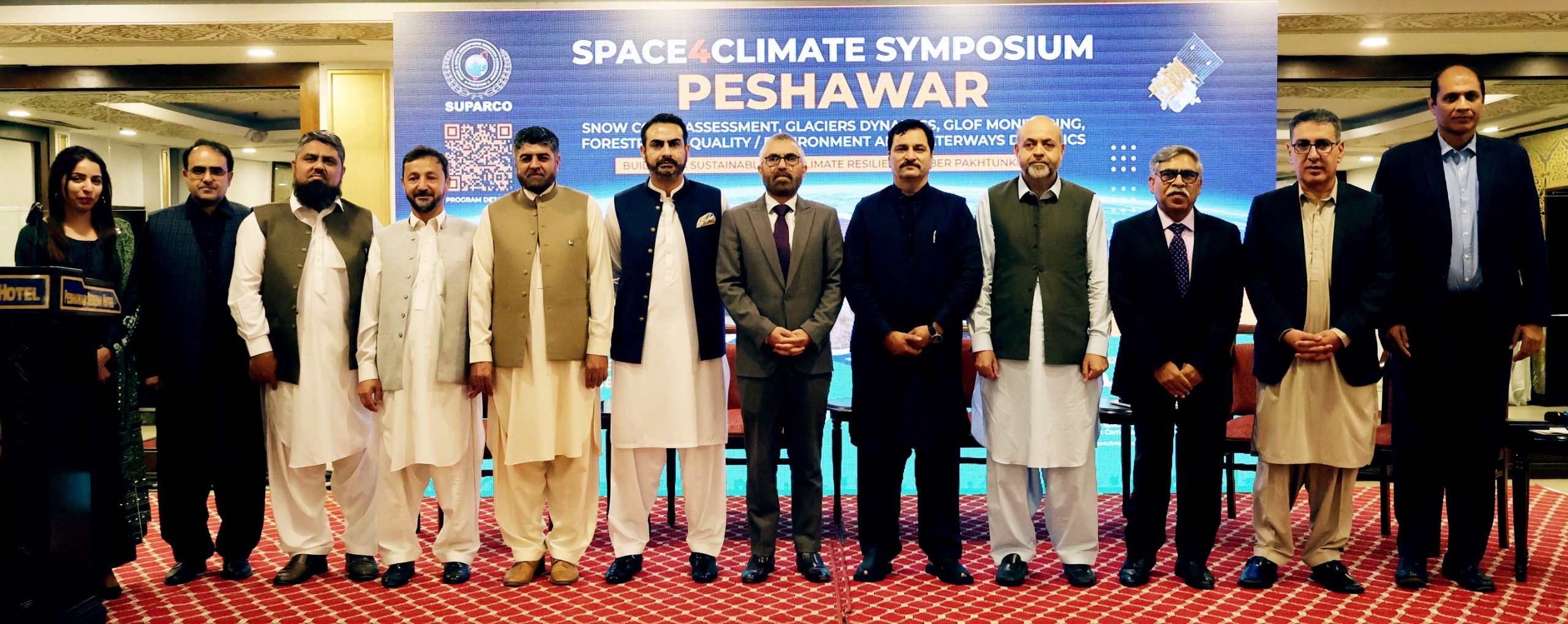
Peshawar: The Pakistan Space & Upper Atmosphere Research Commission (SUPARCO), through its Space Applications Center for Climate Sciences (SACCS), launched its nationwide Space4Climate Initiative and Awareness on Climate Change Impacts from Peshawar on Thursday, bringing together senior government officials, scientists, policymakers, researchers, development partners and environmental experts to advance the use of indigenous space technologies for climate resilience and evidence-based policymaking.
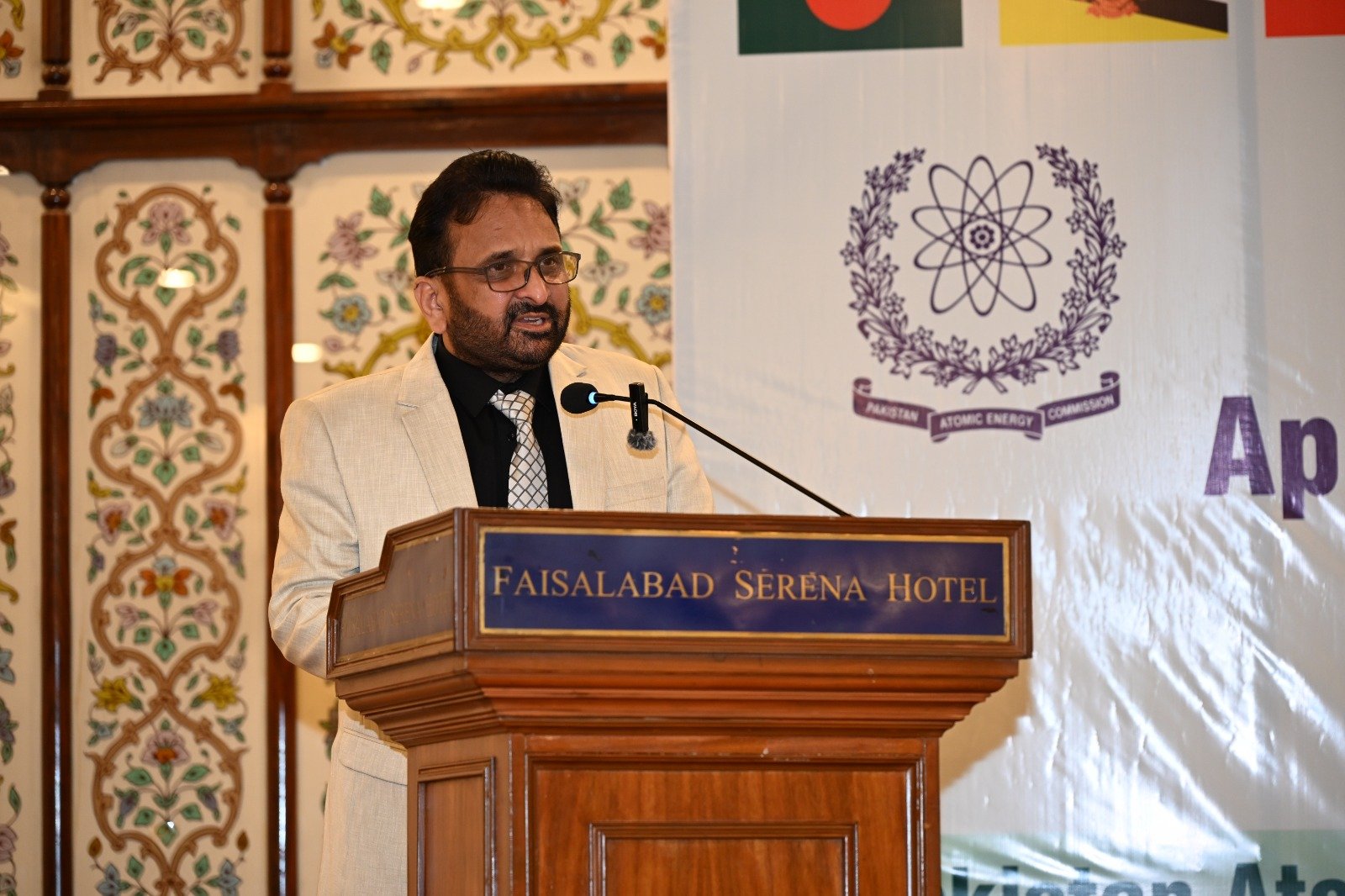
The regional symposium, titled "Space4Climate – Snow Cover Assessment, Forestry, Air Quality/Environment and Waterways Dynamics," was held at Serena Hotel, Peshawar, marking the first event of SUPARCO's seven-city National and Provincial Symposium Series, which will subsequently be hosted in Islamabad, Lahore, Karachi, Quetta, Gilgit and Muzaffarabad.
The initiative aims to strengthen collaboration among federal and provincial institutions while promoting the integration of satellite-derived climate intelligence into disaster risk reduction, environmental governance, natural resource management and sustainable development planning.
In his opening remarks, Dr. Mohammad Farooq, Deputy Director General, SACCS, SUPARCO thanked the participants and highlighted growing importance of space-based climate services in supporting Pakistan's response to climate change and environmental challenges. The welcome remarks were given by Aftab Ahmed Khan Lughmani, Secretary SUPARCO.
The symposium was inaugurated by Talha Hussain Faisal, Senior Secretary, Climate Change, Forestry, Environment and Wildlife Department, Government of Khyber Pakhtunkhwa, who attended as the chief guest. In his address, he emphasized the importance of incorporating advanced geospatial technologies and satellite-based information into provincial climate governance, environmental planning and disaster risk management. He noted that timely scientific information has become increasingly important as Pakistan faces more frequent climate-induced disasters and environmental stresses.
The symposium featured addresses by Dr. Amjad Ali, Director General SPARC, SUPARCO; Dr. Mohammad Farooq, Deputy Director General SACCS, SUPARCO; Farhad Ali, Conservator of Forests, Government of Khyber Pakhtunkhwa; Muhammad Fawad Hayat, Senior Director, Recharge Pakistan, WWF-Pakistan; Mubashar Hussain, Manager Disaster Risk Reduction (DRR), National Disaster Risk Management Fund (NDRMF); Prof. Dr. Atta-ur-Rehman, Department of Geography and Geomatics, University of Peshawar; Dr. Matee Ul Haq, Director SACRED, SUPARCO; Dr. Ibrar ul Hassan Akhtar, Director Geoforestry, SUPARCO; Dr. Said ur Rehman, Director SPARC, SUPARCO Peshawar; and Dr. Jawad Nasir, Director Atmospheric Research, SUPARCO.
The speakers stressed the need for stronger institutional collaboration, wider adoption of scientific data and enhanced use of indigenous satellite technologies to improve climate adaptation, environmental protection and national resilience.
A major highlight of the symposium was the formal presentation of SUPARCO's Space4Climate Initiative, accompanied by a live demonstration of the Space4Climate Geospatial Portals. The demonstration illustrated how satellite-based climate intelligence can support informed decision-making across national and provincial institutions by providing near real-time environmental information.



Comments (0)
Leave a Comment